Modular Straw Bale Housing for Refugees
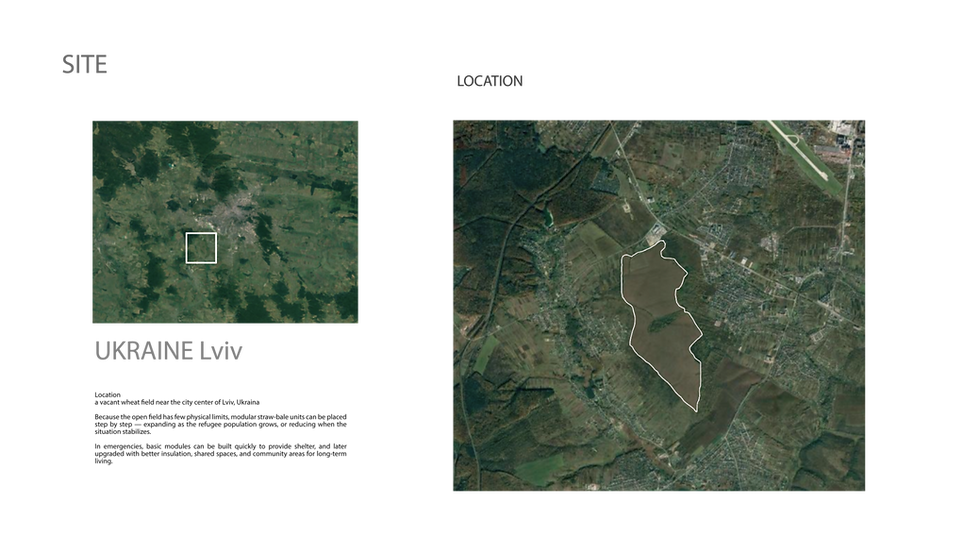
In response to the displacement caused by the war in Ukraine, this project proposes a modular straw-bale housing system on a vacant wheat field near Lviv. Straw left over from seasonal wheat production is a locally available and rapidly renewable agricultural by-product. An envelope composed of compressed straw blocks, timber frames, and clay plaster provides low embodied carbon, high thermal performance, and a construction system that can be assembled rapidly with minimal equipment.
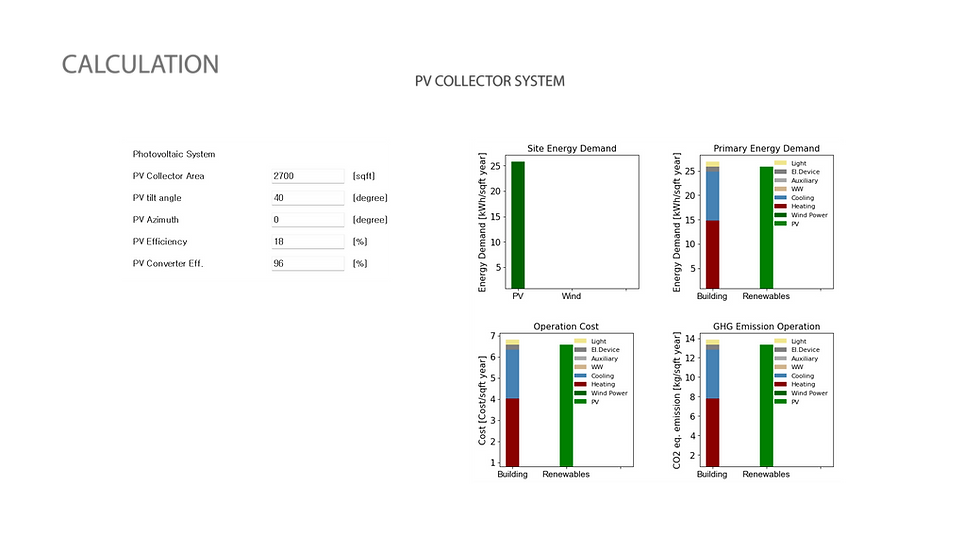
The design was developed through climate and energy analysis using Climate Consultant and CasaSol. Climate Consultant was used to study Lviv’s cold and windy winters, large temperature fluctuations, and potential moisture risks, informing passive strategies such as solar gain through south-facing openings and building configurations protected from prevailing winds. CasaSol was used to evaluate envelope performance, heating demand, and overall energy consumption. Based on these analyses, the design utilizes the high insulation value and airtightness of straw-bale walls while incorporating a smart vapor retarder and a vapor-open exterior membrane, allowing moisture within the wall assembly to dry safely.
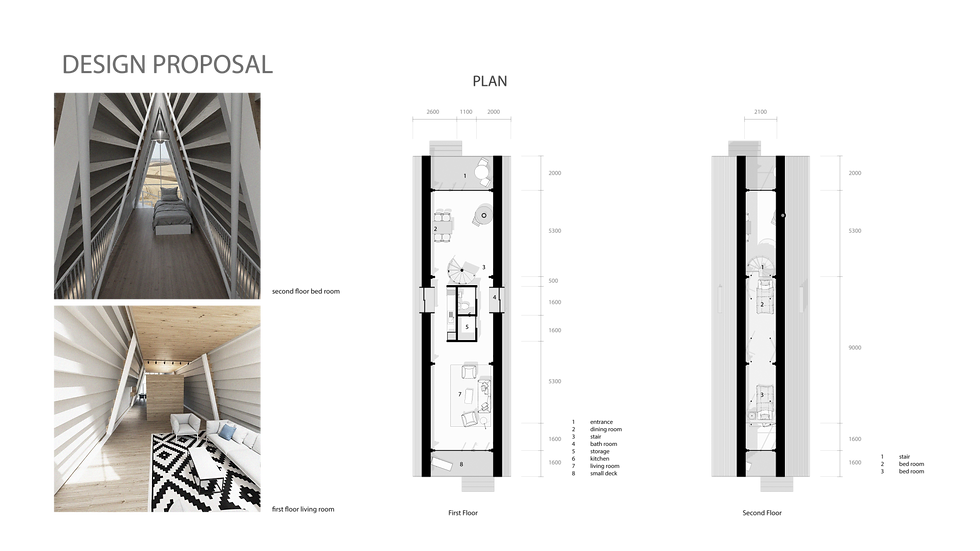
The open wheat field allows the basic housing modules to be deployed incrementally, expanding or contracting in response to changes in the displaced population. In an emergency, prefabricated straw-bale wall panels can provide immediate shelter with minimal site work. Over time, shared facilities, community programs, and photovoltaic panels can be added to support longer-term settlement. Rather than treating emergency housing as a temporary and disposable structure, the project combines local materials, environmental analysis, and an adaptable construction system to propose a sustainable housing model capable of responding to changing social conditions.


Sayyoung Chang + Sujeong Koo
type
Refuge Housing
Location
Lviv, Ukraine
year
2025
Collaborators