Breathing City
Algae-Based Urban Energy Infrastructure
type
Urban Ecological Infrastructure
Location
Boston Harbor, Massachusetts
year
2025
Collaborators
-
Breathing City transforms an abandoned pier in East Boston into a visible energy-production infrastructure and public waterfront landscape. Centered on an algae farm, the project produces biodiesel, absorbs carbon, reuses waste heat for housing, and circulates purified water into community programs.
Rather than hiding infrastructure as an unwanted industrial facility, the project reveals it as a civic and ecological system. By making energy production visible, Breathing City allows residents to understand, participate in, and benefit from the processes that support urban life. Infrastructure is no longer separated from the city, but becomes part of its public identity.
By combining renewable energy infrastructure with housing, gardens, pools, outdoor cinema, recreation spaces, and cultural programs, the project reimagines infrastructure as part of everyday civic life. Breathing City makes energy production public, social, and ecological, transforming a neglected waterfront into a shared resource for the community.

Energy Imbalance in Boston
This research board visualizes Boston’s energy imbalance through mapping, data analysis, and three-dimensional representation. The central map shows Boston Harbor, East Boston, the airport, waterfront, and surrounding districts, while the 3D graph below translates energy consumption into a spatial landscape.
The research began with Boston’s gap between energy consumption and local production. The city consumes approximately 2.5 times more energy than it produces, resulting in energy costs nearly twice the U.S. average. Since residential buildings make up the largest share of building types, high energy prices directly affect everyday households, especially during winter when heating demand sharply increases.
By layering urban density, seasonal heating demand, natural gas dependency, and energy cost, this board establishes the foundation for rethinking energy infrastructure as a visible civic and ecological system within the city.

01 Research / Energy Imbalance
The project begins with an analysis of Boston’s energy imbalance. Through mapping, data visualization, and three-dimensional representation, the research identifies the gap between energy consumption and local production, seasonal heating demand, natural gas dependency, and rising household energy costs.
02 System / Algae-Based Infrastructure
Based on this research, the project proposes an algae-based energy infrastructure. The algae farm produces biodiesel, absorbs carbon, releases oxygen, reuses waste heat for nearby housing, and circulates purified water into public programs. Energy production becomes a visible ecological system within the city.
03 Public Life / Community Waterfront
The infrastructure expands into a civic landscape by integrating housing, gardens, pools, outdoor cinema, recreation areas, cultural programs, and waterfront access. The project transforms an abandoned pier in East Boston into a shared public resource where energy, ecology, and community life coexist.

Why Algae?
Algae were selected because they operate as both an ecological filter and a renewable energy source. Compared to land plants, algae have much higher photosynthetic efficiency, allowing them to absorb more CO₂ and release more oxygen within the same surface area. They can also grow in wastewater or seawater, purifying water while producing biomass.
Within the project, algae are cultivated, harvested, and compressed to extract bio-oil for biodiesel production. The remaining biomass is reused as bio-based insulation panels, while the generated heat and purified water are circulated back into housing and community programs. Through this process, algae become the core of a circular urban energy system.


Climate and Glazing Analysis for Algae Growth
Because the algae farm is enclosed by a glass greenhouse, maintaining an appropriate interior temperature was essential for stable algae growth. The analysis began with Boston’s climate conditions, which are cold and heating-dominant, with humid summers. Since marine algae grow best within a controlled temperature range of approximately 3°C to 24°C, the greenhouse needed to balance winter insulation with sufficient solar gain.
Using Climate Consultant and glazing performance simulations, different glass types were compared in terms of heat loss, solar transmittance, visible light, and total heating demand. While triple glazing provided the strongest insulation, it reduced solar transmission and increased cost. As a result, double Low-E glazing was selected as the most balanced option for maintaining algae growth conditions while reducing energy demand.


This board shows how the algae infrastructure extends into public programs for East Boston’s community. Because more than half of East Boston’s residents are immigrants and many households are renters, the project considers infrastructure not only as an energy system, but also as a social platform.
Programs such as community gardens, outdoor pools, a soccer field, an outdoor cinema, boat-rental and education facilities, cafés, exhibition spaces, and an immigrant community center respond to local needs. Together, they transform the waterfront into a shared civic landscape where energy production, recreation, culture, and everyday community life are connected.

Purified water from the algae system is reused to create a public swimming area along East Boston’s waterfront.
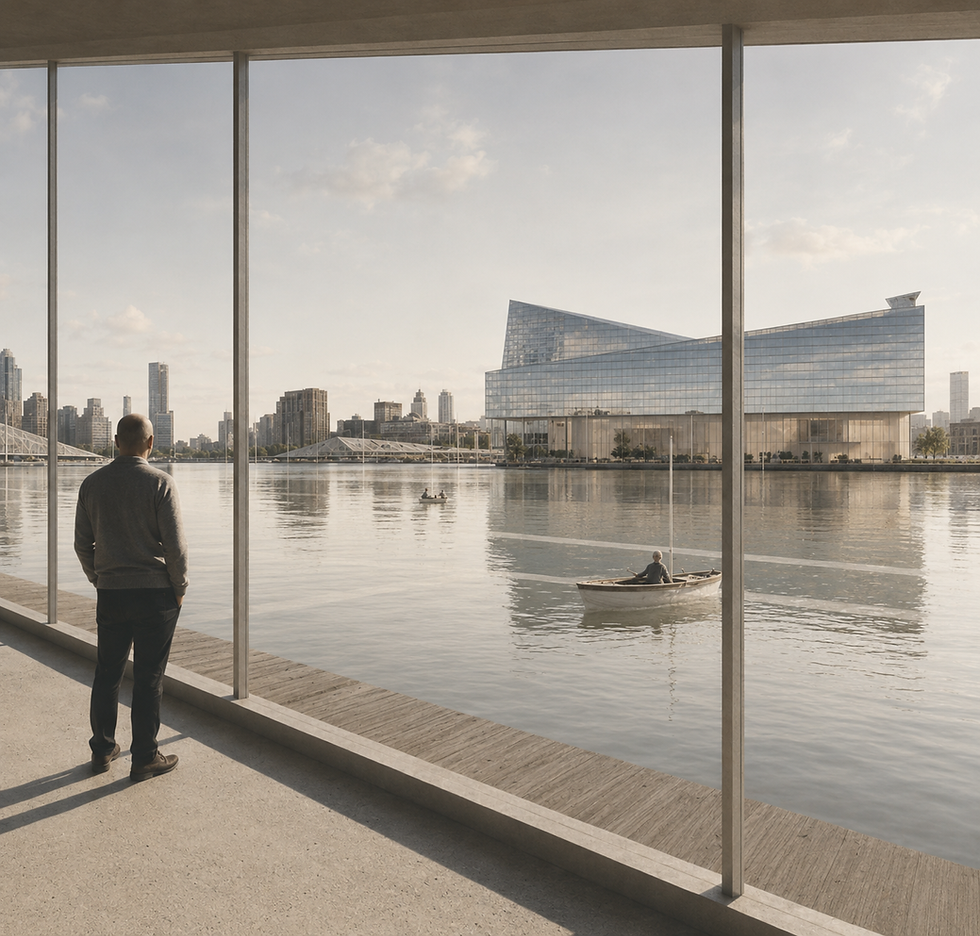

The algae farm becomes a visible part of the waterfront landscape, allowing energy production to be experienced from within the community spaces.
A community interior space opens toward Boston Harbor, framing the waterfront as part of the everyday social experience.

Purified water from the algae system is reused to create a public pool for East Boston residents, where access to swimming facilities is limited.
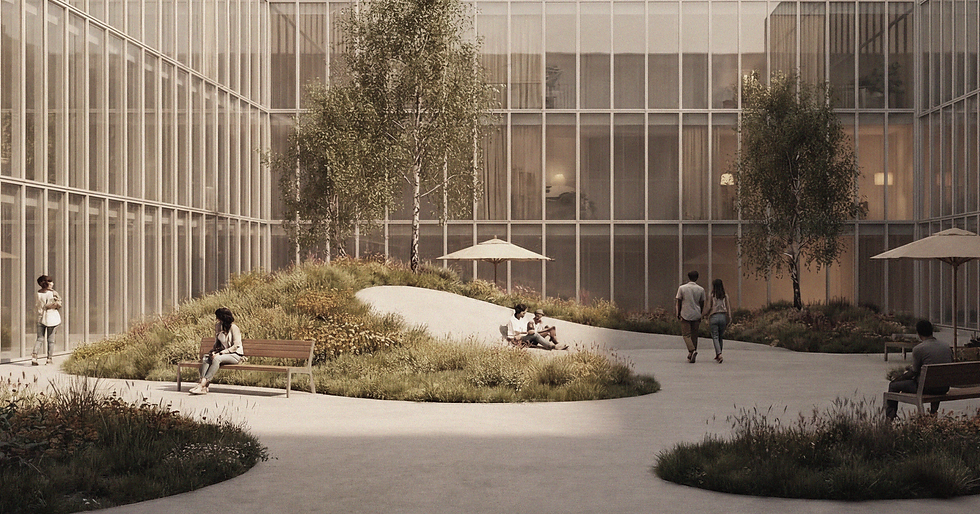
Recycled purified water from the algae system supports a residential courtyard garden.

Urban Breath (Concept Model)
plaster cast in a silicone mold, 17x17x7.5 In

